
Are screw caps really second-rate?
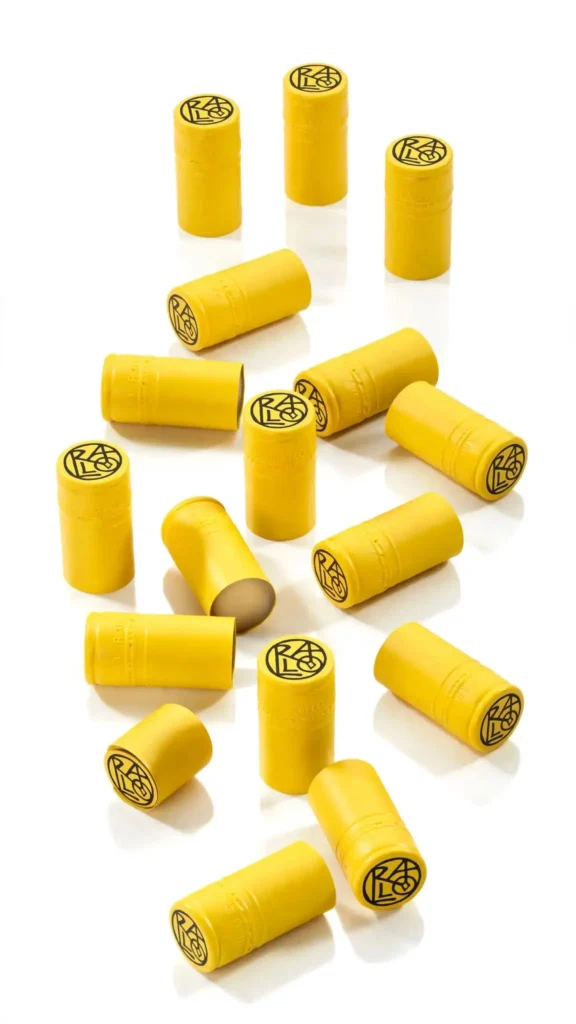
At the restaurant, the sommelier pulls out the bottle, presents it, and then… just a small metallic click. No corkscrew, no resistance from the cork, no “pop.” And on someone’s face, a silent question immediately appears: “So this wine must not be worth much?” It’s time to bust this myth. The answer is no: the screw cap is not a sign of poor quality at all. Let’s see why. Natural cork has an undeniable charm: it’s a noble, renewable material, tied to centuries of winemaking tradition. But it also has a structural flaw the industry has known about for decades: the risk of TCA (trichloroanisole) contamination, the molecule responsible for so-called “cork taint.” It only takes a small percentage of compromised bottles for, on a global scale, millions of bottles to reach consumers tainted — through no fault of the producer, and without the consumer ever knowing. The screw cap was created specifically to eliminate this technical problem. Not to cut costs on quality, but to guarantee it. The screw cap, often called by its commercial name Stelvin — the brand that made it popular — consists of an aluminum cap with an inner lining, usually polyethylene or tin, that ensures a proper seal. Its main feature is predictability: every bottle sealed the same way behaves identically, with minimal and constant oxygen exchange over time. Natural cork, by contrast, is an organic material and therefore inherently irregular: each cork has a slightly different porosity, meaning even bottles from the same batch can evolve differently from one another. This is not a niche solution. New Zealand adopted the screw cap on an almost universal scale for its Sauvignon Blanc and Riesling as early as the early 2000s, winning over even the most skeptical critics. Australia followed a similar path. In Europe, Austrian producers and some of the finest interpreters of German Riesling have used it for years on their flagship labels — including bottles intended for aging. If the screw cap still struggles to shake off its reputation as an “everyday wine” closure, the reason is purely cultural. The ritual of opening a bottle — the corkscrew, the resistance of the cork, the sound — is part of the sensory and emotional experience of drinking wine, especially in convivial or dining settings. Giving it up can feel, wrongly, like giving up part of the ritual itself. But the quality of a wine is measured in the glass, not in the closure. The logic is simple: for fresh, aromatic white wines designed to showcase fruit and minerality — just like Rallo’s — the absence of uncontrolled oxygenation is an advantage, not a limitation. The wine reaches the consumer exactly as the producer intended it in the cellar. So don’t be surprised if an upcoming Rallo wine is presented on the Italian market with a screw cap too — we really are considering it! The screw cap, then, is not a compromise: it’s a technology with its own specific advantages and equally specific limitations, just like cork. The real question to ask in front of a bottle shouldn’t be “what kind of closure does it have?” but rather “was this wine stored and sealed in the way best suited to its style?” Tutte le notizie uncategorized The WineHunter recognizes us once again Once again this year, Merano WineHunter has recognized our work in the vineyard and in the winery: three of our wines have received the prestigious WineHunter Award, earning a plac weblog Marsala is writing a new chapter in its history Marsala is writing a new chapter in its history. After more than 250 years, the denomination confirms itself as one of the strongest in the regional landscape, right after DOC Sici weblog Summer liquid gold August in the kitchen asks for no elaborate preparation: it asks for a ripe tomato cut in half, a fennel and orange salad, bread still fragrant from the oven. And it’s precis weblog Less Wine, More Value The president of Unione Italiana Vini, Lamberto Frescobaldi, said it plainly in an interview with Il Sole 24 Ore: Italian wine needs to cut production. Stock levels have surpassed weblog Toward the Harvest August brings an intense heat, felt this year across all of Europe, reminding us once again how central water management has become to the work of those who tend the land. In Sicil weblog Press kit 2026 PRESS KIT Tutte le notizie uncategorized Press kit 2026 weblog Strangers in One’s Own Home There is a form of disorientation that knows no forests or fog, that needs no cross weblog Strangers in One’s Own Home There is a form of disorientation that knows no forests or fog, that needs no crossroads or starless nights. It is the disorientation of those who inhabit a place without truly dwe weblog Three territory, bound by a single thread One way to know a wine is through its technical sheet — the grape variety, the alcohol, the serving temperature, the food pairings. But there is another way, slower and truer, th weblog The power of roots in a changing market There is a moment, in the life of any sector, when the numbers stop offering reassurance and begin asking questions. Italian wine has been living through this phase for several yea