The president of Unione Italiana Vini, Lamberto Frescobaldi, said it plainly in an interview with Il Sole 24 Ore: Italian wine needs to cut production. Stock levels have surpassed 53.4 million hectoliters, including musts — the equivalent of an entire reserve harvest already sitting in cellars — while prices for designation-of-origin wines have fallen by an average of 10% compared to the previous year.
Frescobaldi’s proposed remedy is clear: a temporary halt to new vineyard planting authorizations, reduced yields even for DOP and IGP wines, updated production regulations, and a more effective penalty system. “Prices for Italian DOC wines are down 10%,” Frescobaldi stated, “that’s a symptom that something isn’t working. We need to reduce production and raise quality. And we need stricter controls.”
One point in particular deserves attention: according to Frescobaldi, producing less isn’t necessarily a bad thing. Compared to the late 1980s, Italy today produces far less wine, and per capita consumption has dropped by roughly two-thirds — yet the sector’s revenue has more than doubled. The message is clear: today, growth in the industry comes from adding value to the product, not from volume.
On the restaurant front, Frescobaldi doesn’t settle for oversimplification. He finds that wine prices in restaurants are too often too high, but is quick to clarify that he doesn’t mean restaurateurs are making huge profits. He’s not pointing a finger at the Ho.re.ca. supply chain, but flagging an imbalance in how value is perceived by the end consumer.
The real issue, then, isn’t just “how much does wine cost at a restaurant,” but the difficulty of getting a price recognized as consistent with quality across the entire supply chain, from producer to wine list. It’s a conversation worth pursuing with the Ho.re.ca. sector too: not about “markups to call out,” but about working together on training, communication, and the perception of value across the whole chain — because price sustainability is part of the same battle for quality.
Rallo 1860 was born in Marsala and grew across the territories of Alcamo, Marsala, and Pantelleria, following a philosophy that, in effect, has long anticipated the direction now coming from the top of the industry: focusing on quality and territorial identity rather than quantity.
Our designations tell the story of precise places, and it’s exactly this specificity that, according to Frescobaldi, is the path the entire sector should follow to move beyond overproduction: less confusion among the hundreds of Italian designations, and more recognition for those that truly communicate a territory.
But if we look at Sicilian wine, this reflection takes on an even sharper and thornier meaning. Because the Sicily that the market knows and talks about is, in fact, a partial Sicily: western Sicily — Marsala and Alcamo — the lands that for centuries built the island’s winemaking reputation on their own, are currently left out of that story. Not for lack of quality: for lack of voice, the very same voice that once made the word “Marsala” the first great Italian designation to conquer the world, and that today must be raised again, louder than before.
And it’s in this gap that the challenge lies for those who, like Rallo 1860, work from and within these territories: to show that specificity isn’t a luxury reserved for a handful of already-established designations, but a possible — indeed necessary — choice, even for a land that still has to reclaim its right to be told as a place, as an identity. The story of a winery like ours, rooted since 1860 in the heart of western Sicily, reminds us that true resilience comes from a bond with the land and the ability to tell its story with authenticity.
We’ve been trying, for over 160 years.
Tutte le notizie
Harvest 2026 – video
Through this video, we want to show you the 2026 harvest: dawn among the vines, the crates slowly filling, the patient work of those who return to the vineyard year after year. A s
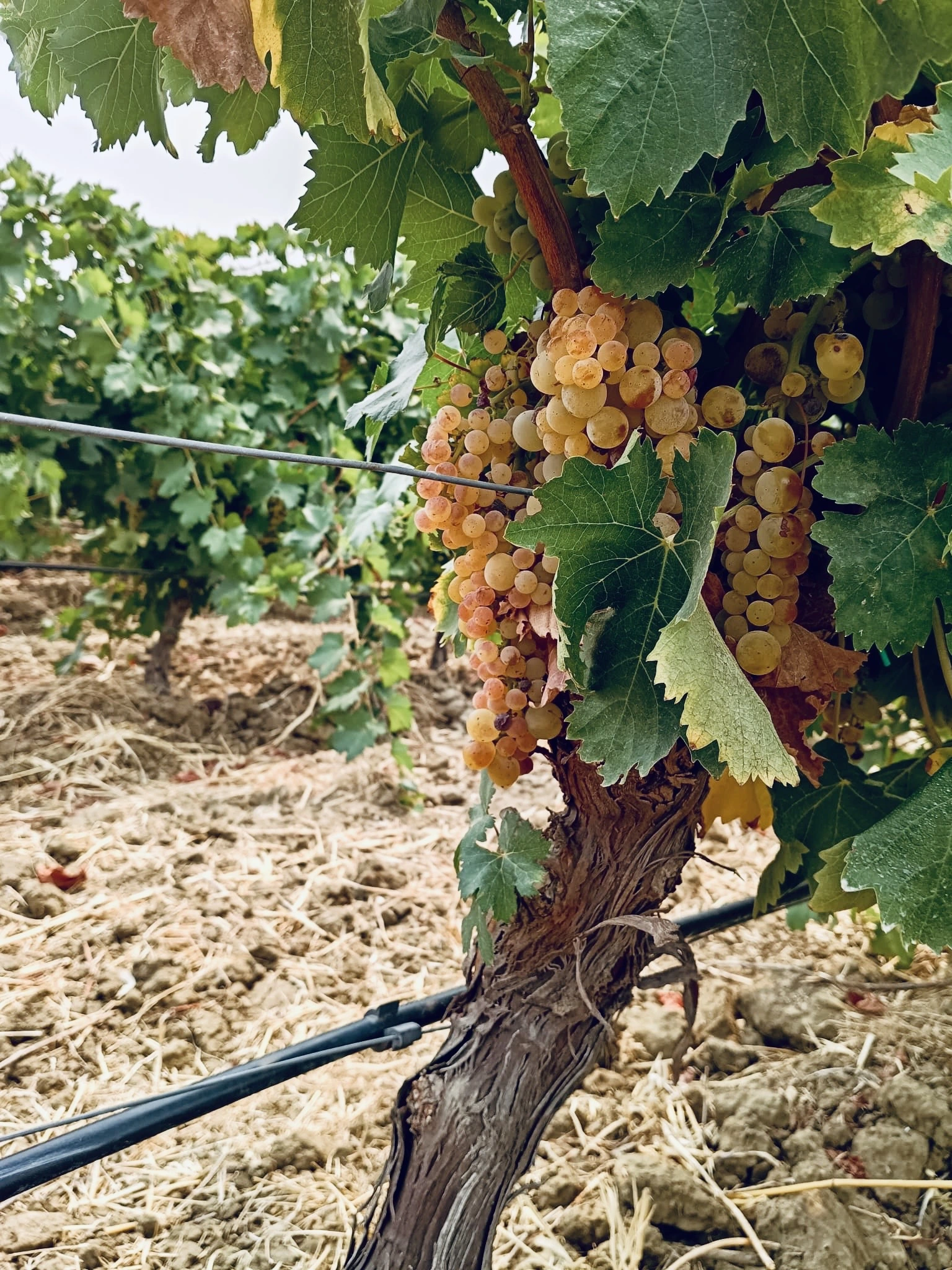
The 2026 Harvest at Rallo
The harvest at Rallo began, as tradition dictates, with the picking of the white grapes: entirely by hand, with the bunches placed in small crates rather than large bins. It is a s
Are screw caps really second-rate?
At the restaurant, the sommelier pulls out the bottle, presents it, and then… just a small metallic click. No corkscrew, no resistance from the cork, no “pop.” An
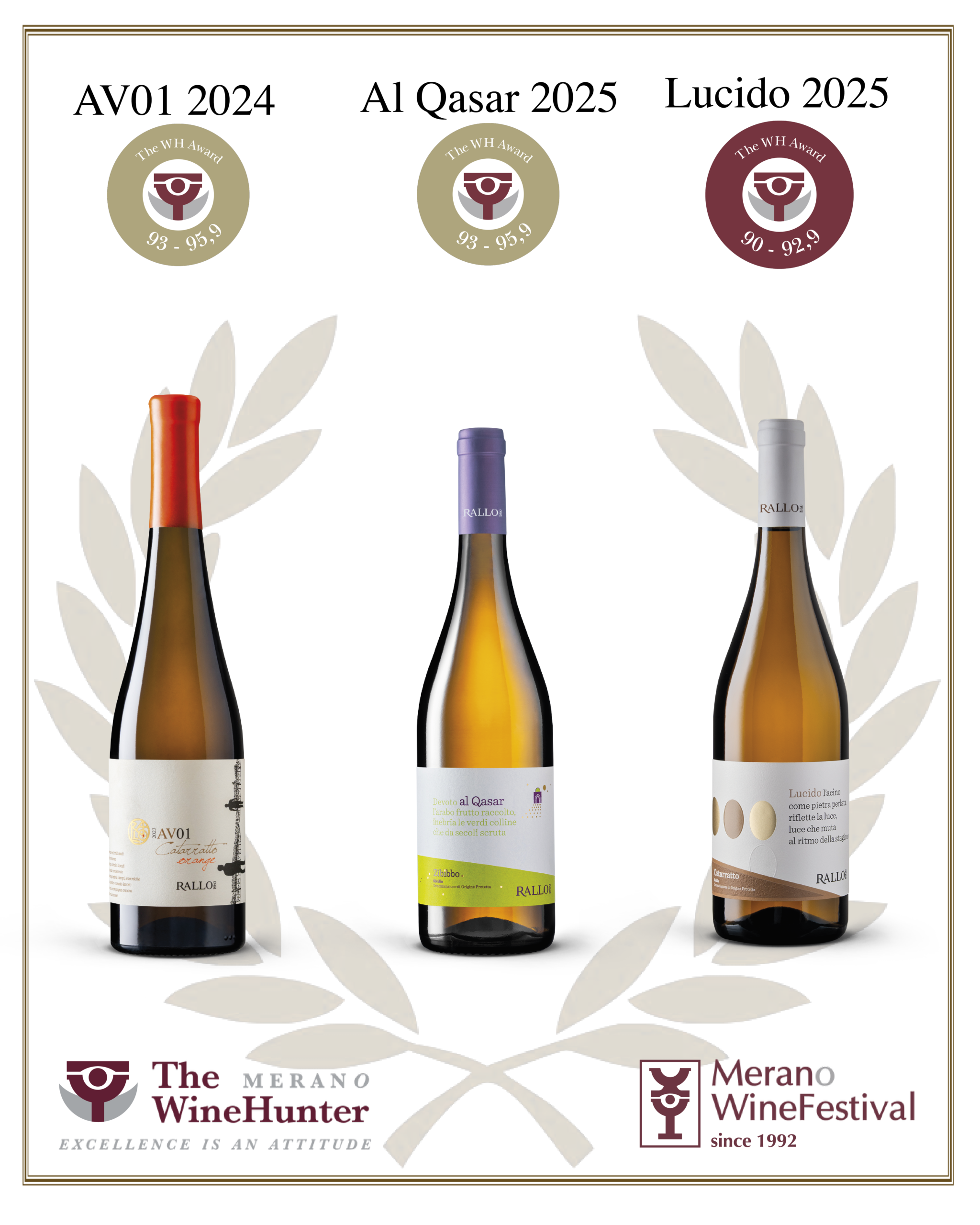
The WineHunter recognizes us once again
Once again this year, Merano WineHunter has recognized our work in the vineyard and in the winery: three of our wines have received the prestigious WineHunter Award, earning a plac
Marsala is writing a new chapter in its history
Marsala is writing a new chapter in its history. After more than 250 years, the denomination confirms itself as one of the strongest in the regional landscape, right after DOC Sici
Summer liquid gold
August in the kitchen asks for no elaborate preparation: it asks for a ripe tomato cut in half, a fennel and orange salad, bread still fragrant from the oven. And it’s precis
Less Wine, More Value
The president of Unione Italiana Vini, Lamberto Frescobaldi, said it plainly in an interview with Il Sole 24 Ore: Italian wine needs to cut production. Stock levels have surpassed
Toward the Harvest
August brings an intense heat, felt this year across all of Europe, reminding us once again how central water management has become to the work of those who tend the land. In Sicil
Press kit 2026
PRESS KIT Tutte le notizie uncategorized Press kit 2026 weblog Strangers in One’s Own Home There is a form of disorientation that knows no forests or fog, that needs no cross