One way to know a wine is through its technical sheet — the grape variety, the alcohol, the serving temperature, the food pairings. But there is another way, slower and truer, that passes through the territory. Through the soil beneath your feet, the air you breathe, the light that shifts depending on where you are. We make wine in three different places, and each of those places has a voice of its own. Three landscapes, three climates, three sensations that cannot be put into words without losing something — but we try all the same.
Patti Piccolo, in Alcamo, is a contrada you reach by leaving the town behind, turning your back on the coast and the sound of the sea. The hills of the Trapani interior open here into wide, silent panoramas, marked by rows of vines — mostly Catarratto — and the occasional small house or tool shed: quiet traces of human presence in the landscape, as unassuming as those who work the land without needing to announce themselves. The climate is that of the Sicilian interior: hot summers tempered by wind, nights that cool just enough, a diurnal range that makes the difference between a flat wine and a living one. The soil is sandy on the hillsides, increasingly clayey as you descend — tenacious, generous only to those who work it with patience. Patti Piccolo in July means feeling the heat rise from the ground and the wind that holds it in balance. It means watching the clusters ripen slowly, with that quiet progression that resembles the growth of things destined to last. The sensory experience is one of suspension between high summer and anticipation. In the glass, that tension becomes citrus freshness, salinity, a drinkability that seems almost guileless and yet conceals a precise underlying structure.
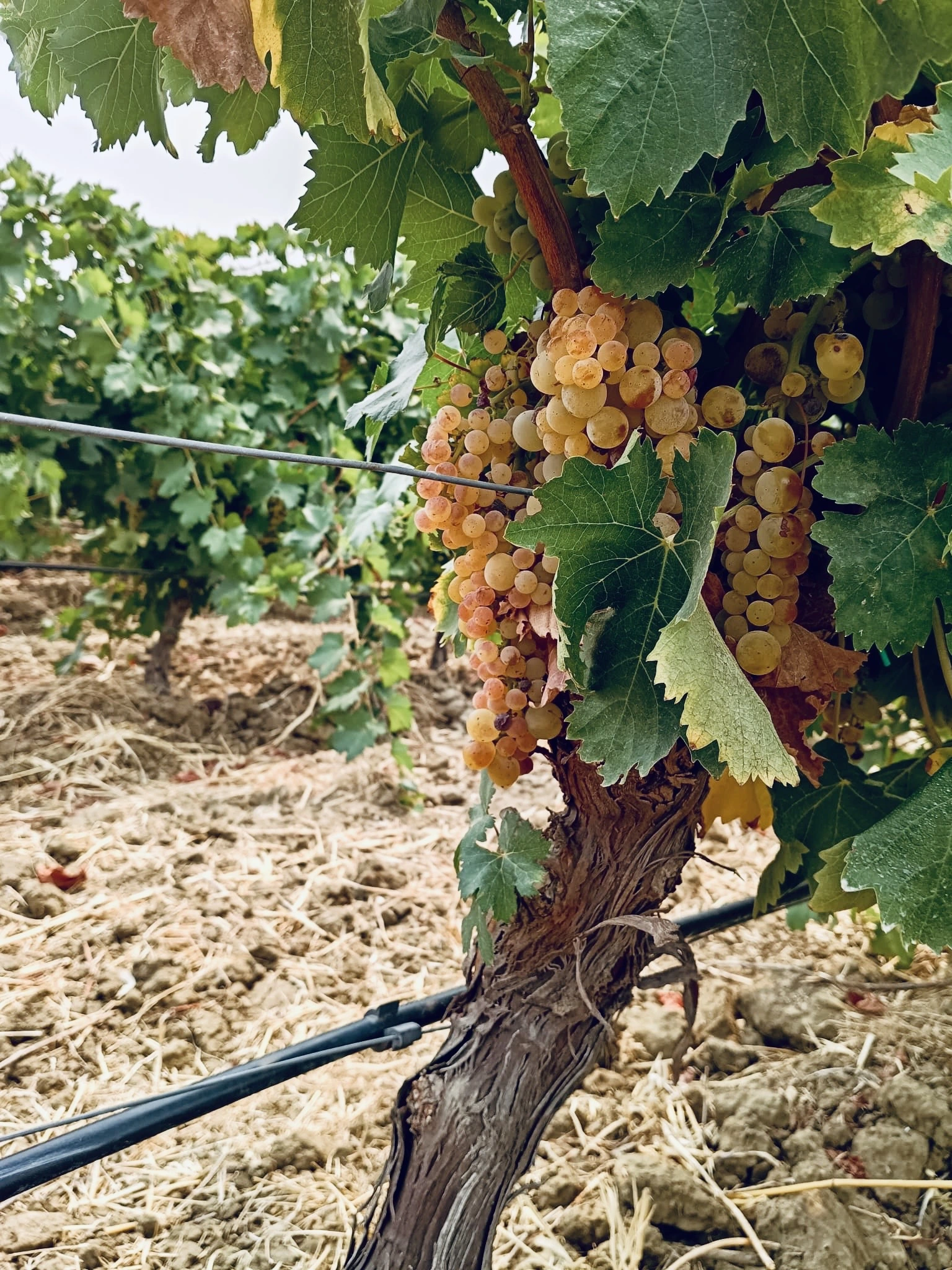
Moving toward the western coast, the landscape changes completely. The hills give way to the plain, the horizon opens all the way to the sea, and the air turns salty — not metaphorically, but physically: the wind that arrives from the Stagnone carries the salt of the salt flats, deposits it on the vines, enters the Grillo that has grown here for generations. Le Piane Liquide is exactly this: a territory where vineyard and sea regard each other at close range, where the light reflected off the water is unlike any other — white, flat, dazzling in the way particular to western Sicily. The summer is long, hot, dry. The wind is constant, almost obsessive, a maestrale that asks no permission and that, over time, has shaped both the landscape and the vines themselves.
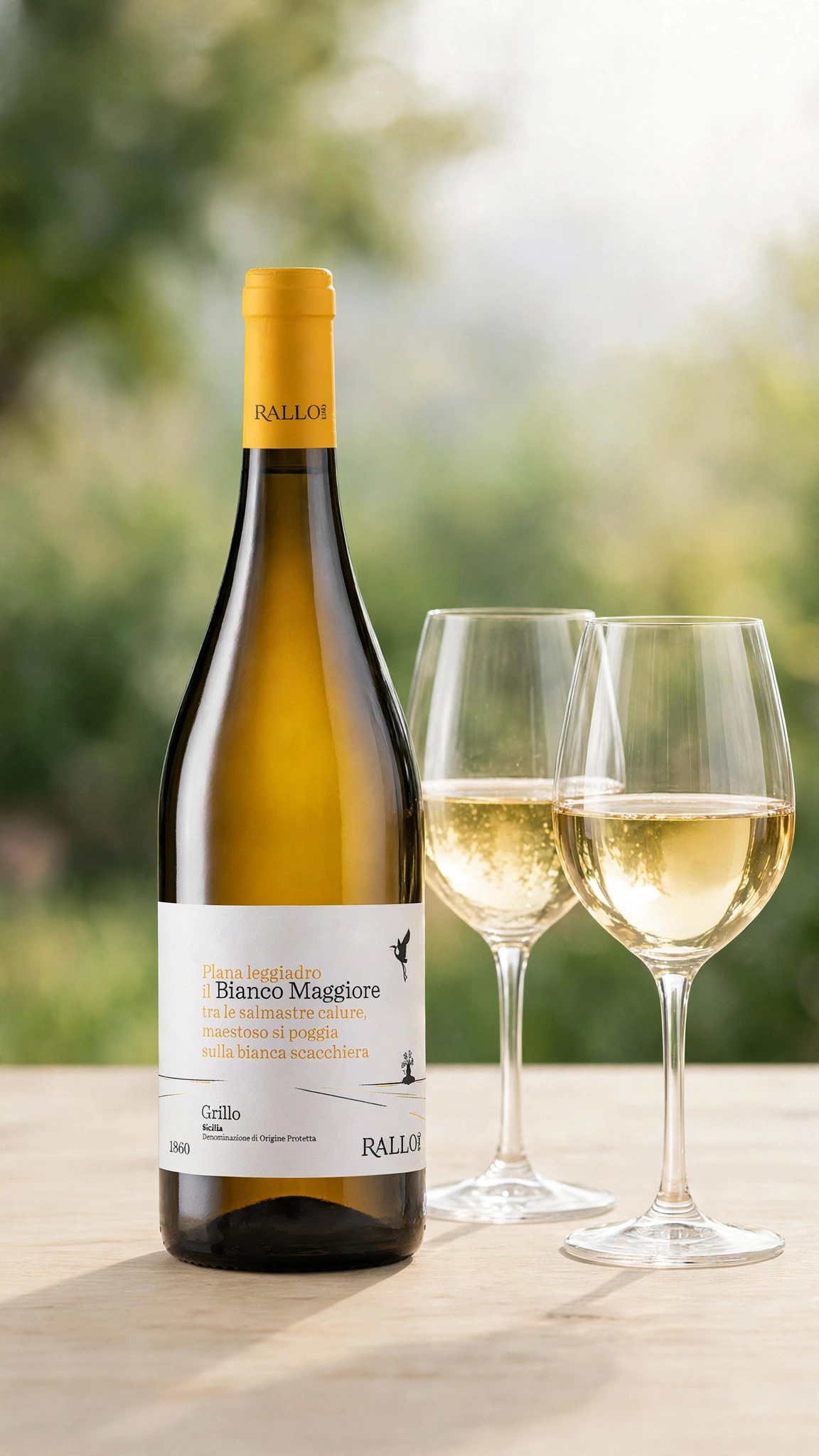
The Grillo that grows here carries all of this with it: the minerality of salt, the luminosity of the sea, a salinity that cannot be achieved in the winery but only through years of living in this specific place. To drink a Bianco Maggiore or La Maggiore with your eyes closed is, in some way, to stand looking out over the Stagnone.
And then there is Pantelleria. And Pantelleria is something else entirely. A volcanic island seventy kilometres from Africa, where the wind blows with such force that it has compelled the vines to grow low, almost lying against the lava soil, in a training system — the alberello pantesco — recognised by UNESCO as a heritage of humanity. The earth is black, volcanic, porous. The soil absorbs heat during the day and releases it at night, creating a microclimate unlike any other. Zibibbo, the Muscat of Alexandria, grows here as it grows nowhere else — concentrated, aromatic, capable of expressing aromas of dried apricot, figs, honey and Mediterranean herbs that seem to arrive from another time.
To stand in the vineyard on Pantelleria is to understand immediately why certain wines are possible only there. This is not romanticism: it is agronomy, geology, history. It is a place that gets inside you before you even open the bottle.
The thread that holds it all together.
Three territories so different from one another might seem like a contradiction for a single winery. In reality they are its greatest wealth and its highest responsibility. Because working in three such distinct places means you cannot afford a single answer that works for all of them. It means listening to each vineyard for what it is, without forcing it to become something else.
The thread that connects Alcamo, Marsala and Pantelleria is not a style, not a technique. It is an attitude: the conviction that the best wine is the one that knows where it was born — and shows it in the glass, without needing to explain itself.